How IPTV Works: The Technical Breakdown Explained Simply
Look under the hood of IPTV. Discover how IP data transforms your Canadian internet connection into a powerful television experience.
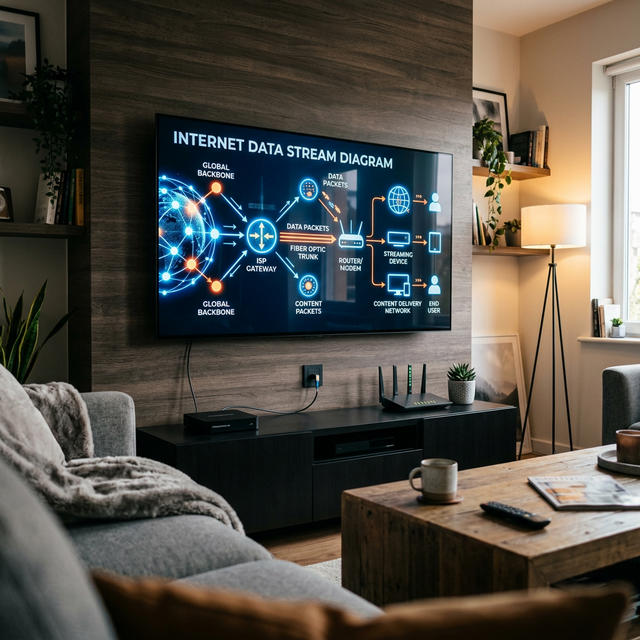
Understanding the technical aspects of IPTV will not only help you make better purchasing decisions but also empower you to troubleshoot common issues yourself.
Traditional Broadcasting vs. IPTV
Cable/Satellite Television (The Past): Service providers (like Rogers or Bell) continuously transmit all channels to all* subscribers simultaneously. This is the "Broadcasting" model. Your set-top box acts as a passive receiver that filters the signal you want to watch. The drawback? Massive bandwidth waste and zero flexibility. IPTV (The Present & Future): Internet Protocol Television operates on-demand. The channels live on massive remote servers. When you select a channel via your CANADAHD subscription, your device sends an IP (Internet Protocol) request. The server then transmits only* the data stream corresponding to that specific channel. This is known as "Unicasting" or "Multicasting".
The Architecture of an IPTV Network (In 3 Steps)
Here is what happens technically when you press "Play" on your remote control in Canada:
Interactive Technical FAQ
[!NOTE]
Q: Does IPTV consume a lot of internet data?
A: Yes. A standard HD stream consumes roughly 1.5 to 3 GB per hour. It is highly recommended to have an unlimited internet data plan with your Canadian ISP.
[!NOTE]
Q: Why is my IP address important to the provider?
A: The IPTV authentication server needs your IP address to know exactly where to route the video packets. This is also why utilizing a VPN for IPTV is beneficial to mask your identity and maintain privacy.
By grasping this underlying technology, you are now equipped to maximize your Canadian IPTV experience. You can return to our main pillar article to learn more: The Ultimate Guide to IPTV in Canada.
Jean-François Tremblay
Digital Streaming Expert
With 10 years of experience in Quebec telecommunications.